
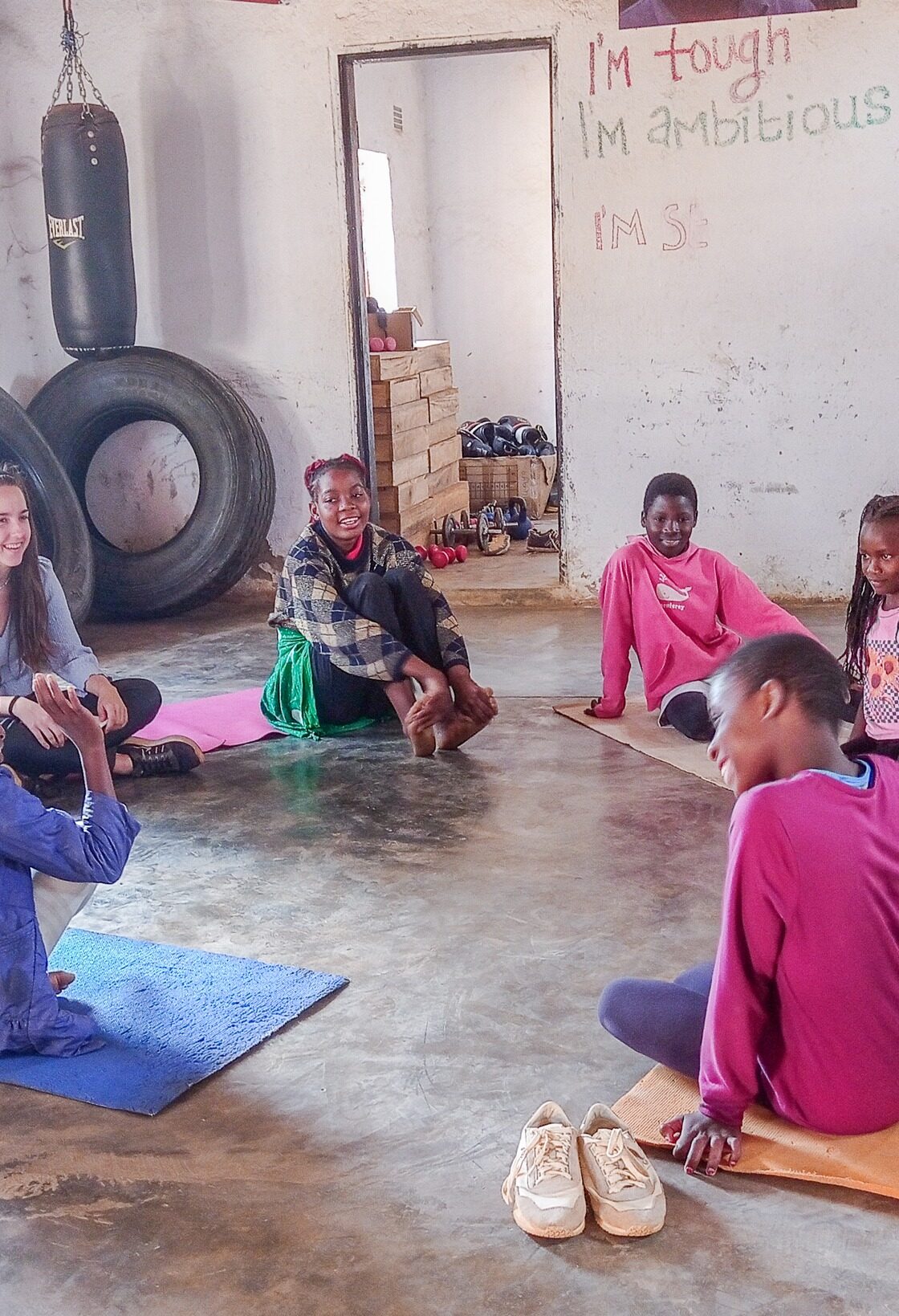
When Boxing Gloves Meet Inner Strength
The girls gathered at Mwayi Wosintha’s Kawale offices know something about physical strength. Many participate in the organisation’s boxing and gym programmes, where they’ve learned to throw punches, build muscle, and push through physical challenges they once thought impossible.
But the workshop led by Janneke and the Pioneers of Change team addresses a different kind of strength—one that doesn’t come from biceps or cardiovascular endurance, but from something harder to build and easier to damage: self-confidence.
For girls who have experienced abuse, exploitation, or the grinding poverty that makes survival itself a daily challenge, self-confidence often represents a luxury they’ve never been able to afford. When your experiences have taught you that you’re powerless, that your voice doesn’t matter, that your dreams are irrelevant to harsh realities, building belief in yourself and your abilities requires more than positive thinking. It requires confronting painful truths, challenging internalised messages, and learning to see yourself through new eyes.
This is the work happening in the workshop today—work as important as any physical training these girls undertake, and in many ways, considerably harder.
The Hidden Crisis: Why Vulnerable Girls Lack Confidence
To understand the significance of this self-confidence workshop, one must first understand what has eroded these girls’ belief in themselves. They don’t lack confidence because they’re naturally timid or insufficiently ambitious. They lack confidence because their life experiences have systematically taught them that they lack value, agency, and capability.
Many have experienced sexual abuse or exploitation, situations where their bodily autonomy was violated and their objections ignored. Such experiences imprint powerful messages about powerlessness and worthlessness. When your ‘no’ has been consistently overridden, when your body has been treated as someone else’s property, developing confidence in your ability to set boundaries or assert yourself becomes profoundly difficult.
Poverty compounds these challenges in insidious ways. Girls who cannot afford school fees or basic necessities often experience deep shame about their circumstances. They internalise society’s judgement that their poverty reflects personal failure rather than systemic inequality. They learn to expect rejection, to anticipate that doors will close when people learn where they’re from or what they’ve experienced. This anticipation becomes self-fulfilling; they stop trying because they’re convinced trying is pointless.
Cultural messages about gender further erode confidence. Malawian girls often grow up hearing that they’re less capable than boys, that their opinions matter less, that their proper role involves submission and service rather than leadership or ambition. These messages, repeated across countless interactions and observations, become part of how girls understand themselves. Challenging them requires not just individual effort but confronting deeply embedded cultural beliefs.
Educational limitations play their part too. Girls who missed schooling or struggled academically often carry profound insecurity about their intelligence and learning ability. They assume they cannot understand complex concepts, cannot acquire new skills, cannot compete with more educated peers. This assumed intellectual inadequacy constrains possibilities before they’re even explored.
The result of all these factors is a population of young women whose actual capabilities far exceed their perceived capabilities. They possess resilience, resourcefulness, and strength forged through surviving circumstances that would break many people. But they don’t see these qualities in themselves. They see only their vulnerability, their disadvantages, their failures—real or imagined. The workshop aims to change this perception, helping girls recognise and build upon strengths they already possess but haven’t learned to value.
Building Blocks: What the Workshop Teaches
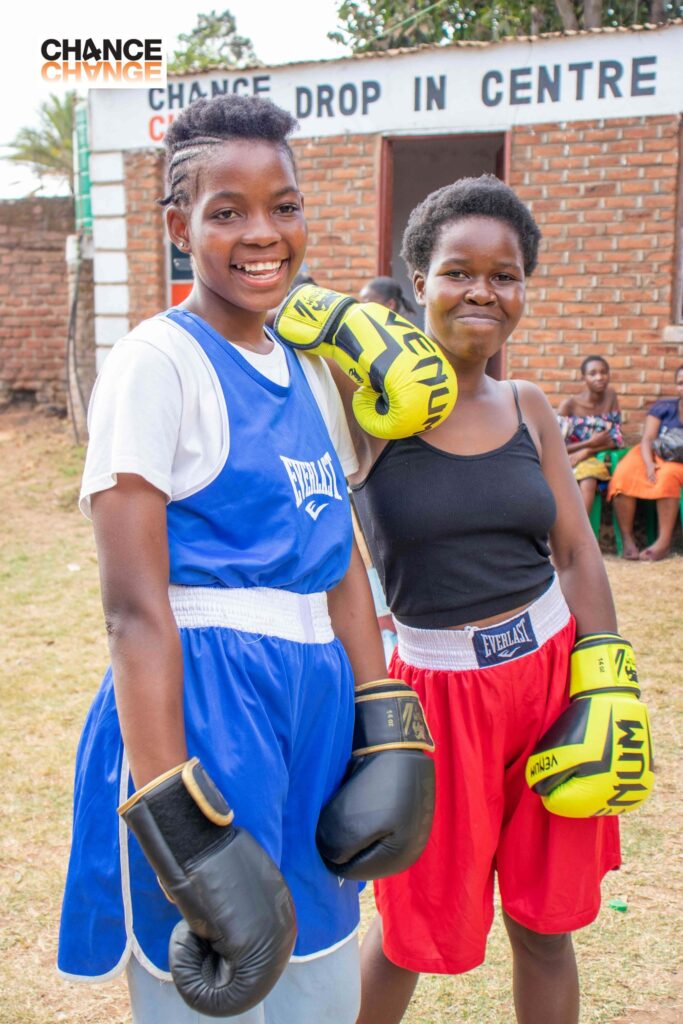
Janneke and the Pioneers of Change team structure the self-confidence workshop around both instruction and shared experience, recognising that building confidence requires both understanding the concept and seeing it modelled in one’s own life and the lives of peers.
The session begins with fundamental questions: What is self-confidence? How does it differ from arrogance or false bravado? Why does it matter? Many participants have never been asked to articulate what confidence means or consider its importance. The discussion reveals that confidence isn’t about thinking you’ll never fail or never struggle. It’s about trusting that you can handle challenges, learn from setbacks, and persist despite difficulties. It’s believing that your perspective has value, that your goals are worth pursuing, that you deserve respect and opportunity.
Understanding why confidence matters proves revelatory for many girls. They begin recognising how lack of confidence has constrained their choices and shaped their experiences. The girl who didn’t speak up when she knew the answer in class because she assumed she must be wrong. The young woman who accepted disrespectful treatment from a boyfriend because she believed she didn’t deserve better. The participant who didn’t pursue an opportunity because she convinced herself she’d fail anyway. These aren’t random incidents; they’re patterns created by insufficient confidence, and recognising the pattern is the first step toward changing it.
The workshop then moves to practical strategies for building self-confidence. These aren’t abstract recommendations but concrete techniques participants can apply immediately. Identifying and challenging negative self-talk helps girls recognise when they’re reinforcing damaging beliefs about themselves. Setting small, achievable goals creates opportunities to experience success and build momentum. Celebrating accomplishments, however modest, trains the mind to recognise capability rather than fixating on inadequacy.
Learning to reframe failures represents particularly important work. The facilitators help girls understand that setbacks don’t prove their inadequacy; they’re normal parts of any learning process. Every successful person has failed repeatedly; the difference lies in persisting despite failure rather than allowing failure to define self-perception. For girls whose life experiences have provided ample evidence of things not working out, this reframing offers powerful alternative interpretation of their histories.
The discussion of body language and presentation surprises many participants. They learn that confidence isn’t just internal feeling but external presentation—how you stand, make eye contact, speak. Practising confident posture and communication feels awkward initially, even false. But the facilitators explain that sometimes behaviour changes before feelings do; acting confident can eventually help you feel confident. This challenges assumptions that you must wait to feel different before behaving differently.
The workshop also addresses the relationship between self-confidence and preparation. Confidence without competence is hollow, potentially dangerous. The most sustainable confidence comes from developing real skills and knowledge, from knowing you’ve prepared thoroughly. This connects to the broader Pioneers of Change programme’s emphasis on skills development, entrepreneurship training, and education—all building genuine capability that supports authentic confidence.
The Power of Shared Experiences
Perhaps the workshop’s most transformative component comes when participants share their own experiences of situations where they felt they needed better confidence. These stories create connection, validation, and collective wisdom that no lecture could replicate.
One girl describes how she wanted to join a football team but convinced herself she wasn’t athletic enough, only to discover months later—after finally gathering courage to try—that she was actually quite skilled. The regret about wasted time mingles with pride in eventually overcoming fear. Other participants nod in recognition; they’ve had similar experiences of letting fear prevent them from pursuing opportunities.
Another shares about staying silent when a shopkeeper shortchanged her because she lacked confidence to challenge an adult in authority. The money wasn’t much, but the experience reinforced her belief that she couldn’t stand up for herself. The facilitators help her see that speaking up doesn’t require perfect confidence; it requires willingness to try despite nervousness. They practice assertive but respectful ways to handle such situations, role-playing until the words feel less foreign.
A participant talks about how shame about her family’s poverty made her avoid making friends, assuming others would reject her if they knew her circumstances. The isolation deepened her depression and reinforced beliefs about her unworthiness. Other girls share similar stories of self-imposed isolation driven by anticipated rejection. They begin recognising that many of the barriers they face exist primarily in their own minds, constructed from fear and past hurts but not necessarily reflecting current reality.
These shared stories serve multiple purposes. They validate individual experiences, showing girls that their struggles aren’t unique or evidence of personal failing. They demonstrate that confidence challenges affect even those who appear outwardly strong—the accomplished boxer who struggles with social anxiety, the bright student who freezes when asked to speak publicly. They create space for vulnerability and honesty that allows deeper work to happen.
The sharing also generates collective wisdom. When one girl describes a strategy that helped her overcome a confidence challenge, others gain tools they can adapt. When someone articulates a fear that others share but haven’t named, the group can work together on addressing it. The facilitators guide these discussions, ensuring they remain productive and supportive rather than descending into shared victimhood or despair.
Crucially, the sharing creates peer support networks that extend beyond the workshop itself. Girls who’ve opened up about their struggles with confidence form bonds built on mutual understanding and shared commitment to growth. They become accountability partners, encouraging each other to apply workshop lessons in daily life, celebrating small victories, providing support through setbacks. These peer networks often prove more powerful than any formal intervention in sustaining change.
The Ripple Effects of Self-Confidence

The workshop facilitators emphasise that building self-confidence isn’t an end in itself but a foundation for broader positive changes across multiple life domains. The benefits ripple outward in ways that transform not just how girls feel but how they function in the world.
Improved self-esteem represents the most direct benefit. Girls who develop genuine confidence begin seeing themselves as valuable, worthy of respect and opportunity. This shift in self-perception fundamentally changes how they allow others to treat them. A girl with healthy self-esteem is less likely to accept abuse or exploitation, more likely to demand fair treatment, better equipped to recognise when situations or relationships are harmful. For girls vulnerable to exploitation precisely because they’ve been conditioned to undervalue themselves, this transformation can be literally life-saving.
Positive self-worth connects closely to self-esteem but extends to encompassing sense of one’s inherent value regardless of circumstances or achievements. Girls who develop this understanding recognise that their worth isn’t contingent on being perfect, pleasing others, or meeting external expectations. They’re valuable simply because they exist, because they’re human beings with dignity and rights. This bedrock belief provides remarkable resilience against the inevitable failures, rejections, and disappointments life delivers.
Decreased anxiety and fear emerge as confidence grows. Much anxiety stems from catastrophic thinking about potential failures or negative outcomes. When you believe you can handle challenges and recover from setbacks, many feared scenarios lose their power to paralyse. The anxiety doesn’t disappear entirely—some nervousness before new experiences is normal and even useful—but it becomes manageable rather than overwhelming. Girls report sleeping better, experiencing fewer stress-related physical symptoms, and feeling less controlled by worry about the future.
The development of leadership capacity represents one of the workshop’s most important long-term benefits. Leadership requires confidence to voice opinions, make decisions, accept responsibility, and persist despite criticism or opposition. Girls who lack confidence may possess natural leadership qualities but never exercise them because they don’t trust themselves to lead effectively. As confidence grows, these dormant leadership abilities emerge. Participants begin taking initiative in group activities, volunteering for responsibility, speaking up in discussions, and inspiring others through their example.
Increased motivation flows naturally from growing confidence. When you believe your efforts can succeed, when you trust your capability to learn and improve, when you’re convinced that your goals are achievable, motivation follows almost automatically. The girl who previously gave up at first difficulty now persists because she believes persistence can yield results. The participant who never bothered trying now takes action because she’s convinced action matters. This shift from passive acceptance to active engagement transforms life trajectories.
The connection between confidence and happiness might seem obvious, but it operates through subtle mechanisms. Confident people aren’t happy because nothing ever goes wrong; they’re happier because they handle difficulties more effectively, dwell less on failures, and recognise their own agency in shaping their lives. They experience more frequent positive emotions because they pursue opportunities that bring satisfaction. They suffer less from the corrosive effects of chronic self-doubt and negative self-judgment. The overall quality of life improves not through changed circumstances but through changed perspective and capability.
Improved relationships emerge as perhaps the most socially significant benefit. Confident people communicate more clearly, set appropriate boundaries, choose partners and friends more wisely, and handle conflict more constructively. They’re less likely to remain in harmful relationships out of fear they don’t deserve better. They’re better able to form healthy connections because they’re not constantly seeking external validation or hiding their authentic selves. For girls whose relationship patterns have often been shaped by exploitation and subordination, learning to build relationships from position of confidence rather than desperation transforms their social worlds.
The Connection Between Physical and Psychological Strength
It’s not coincidental that this self-confidence workshop brings together participants from Mwayi Wosintha’s boxing and gym programmes. The connection between physical training and psychological confidence runs deeper than many realise, and the Pioneers of Change programme deliberately leverages this relationship.
Boxing provides unique benefits for building confidence. It teaches girls that they’re physically capable of defending themselves, challenging deeply ingrained beliefs about female weakness and vulnerability. The first time a girl throws a proper punch, lands a solid hit on the heavy bag, or spars successfully with a partner, something shifts in how she understands her own power. This isn’t abstract empowerment rhetoric; it’s embodied knowledge that she possesses physical strength and can use it effectively.
The discipline required for boxing training builds mental toughness that transfers to other life domains. Learning to push through discomfort, to continue when you’re tired, to get back up after being knocked down—these aren’t just boxing skills. They’re life skills. Girls who’ve learned to persist through gruelling training sessions find themselves better equipped to persist through academic challenges, business difficulties, or personal setbacks.
Achievement in boxing provides concrete evidence of capability. When you’ve trained hard and seen measurable improvement—faster combinations, better footwork, increased strength—you’ve proven to yourself that effort yields results. This experiential knowledge contradicts learned helplessness and builds belief in your ability to develop competence through practice. The confidence gained in the gym radiates outward, influencing how you approach all challenges.
The boxing programme at Mwayi Wosintha has produced elite athletes, girls who represent Malawi in regional competitions. These visible success stories provide powerful role models for other participants. When girls see peers who share their backgrounds achieving excellence, it expands their sense of what’s possible. The champion boxer becomes evidence that girls like them can excel, can compete, can win—and that excellence isn’t reserved for those from privileged backgrounds.
The self-confidence workshop builds on foundations laid through physical training. It helps participants articulate and consolidate lessons learned implicitly through boxing. It extends confidence developed in the gym to other life contexts. It provides frameworks for understanding why boxing makes them feel stronger and strategies for applying that strength beyond athletic contexts. The combination of physical and psychological work creates synergistic effects that neither approach could achieve alone.
Learning to Trust Yourself
At the workshop’s core lies a deceptively simple message: it’s important for girls to trust in themselves and their abilities in whatever they do. For participants whose life experiences have taught them that trusting themselves leads to disappointment, this represents radical shift in perspective.
Self-trust means believing your judgement is sound, your instincts are valuable, your decisions are reasonable. It means not constantly second-guessing yourself or seeking external validation before acting. For girls conditioned to defer to others’ opinions, to doubt their own perceptions, to assume they’re probably wrong when they disagree with authority figures, developing self-trust requires conscious, sustained effort.
The facilitators explain that self-trust doesn’t mean assuming you’ll never make mistakes or that your first instinct is always right. It means trusting that you can learn from mistakes, correct course when needed, and ultimately navigate life’s complexities reasonably well. It’s confidence in your capacity to handle whatever comes rather than confidence that nothing difficult will come.
Comfort in one’s true self emerges as self-trust develops. Many girls have learned to hide aspects of themselves deemed unacceptable—their poverty, their experiences, their struggles, their authentic personalities. They perform versions of themselves designed to avoid rejection or judgement. This constant performance exhausts and alienates. Learning to show up as your genuine self, to stop apologising for your existence, to recognise that your authentic self is worthy of acceptance—this represents profound liberation.
The workshop emphasises that comfort with oneself doesn’t require waiting until you’ve fixed all your flaws or achieved all your goals. You can be works-in-progress whilst still valuing yourselves in the present. You can acknowledge areas needing growth whilst refusing to define yourselves by inadequacies. This balanced self-perception—realistic about limitations whilst recognising strengths—provides healthier foundation than either grandiose self-delusion or crushing self-criticism.
Moving Forward Rather Than Backing Away
One of the workshop’s most practical applications involves changing how participants respond to opportunities and challenges. The facilitators describe how lack of confidence causes people to back away from possibilities that could improve their lives—new relationships, educational opportunities, business ventures, social connections. Fear of failure, rejection, or embarrassment makes retreat seem safer than engagement.
Confidence enables different response. When opportunity arises, confident people move towards it rather than away. They don’t assume they’ll automatically succeed, but they trust their ability to handle whatever happens. They’re willing to risk failure because they believe failure won’t destroy them. They understand that backing away guarantees you’ll never benefit from the opportunity, whilst moving forward at least creates possibility of positive outcomes.
The same principle applies to relationships and social connections. Girls who lack confidence often isolate themselves, assuming others will reject them if given the chance. They interpret neutral social cues as evidence of dislike. They avoid situations where they might be evaluated or judged. The resulting isolation reinforces their negative self-perception in vicious cycle.
Developing confidence breaks this pattern. Girls begin approaching rather than avoiding social situations. They interpret ambiguous cues more generously. They risk initiating friendships. Not every attempt succeeds—some people won’t like them regardless of confidence level—but enough succeed that positive experiences accumulate. Social networks expand. Isolation decreases. Quality of life improves substantially.
The workshop particularly emphasises resilience when things don’t work out initially. Every person experiences failures, rejections, and disappointments. The difference lies in response. People who lack confidence interpret setbacks as confirmation of their inadequacy. They use failure as evidence that they shouldn’t have tried in the first place. They give up.
Confident people interpret the same setbacks differently. They see failure as information rather than indictment. They ask what went wrong and what they can learn rather than concluding they’re fundamentally incapable. Crucially, they try again. This persistence transforms failure from ending to step in learning process. Girls who develop this resilient mindset gain enormous advantage in navigating life’s inevitable difficulties.
The facilitators share examples from participants’ own experiences. The girl who failed her first entrepreneurship quiz but persisted and eventually completed the course successfully. The boxer who lost her first several sparring matches but continued training and now wins competitions. The student who struggled with reading but kept practising and now helps tutor younger girls. These stories provide concrete evidence that persistence despite failure yields results, that confidence to try again matters more than avoiding failure altogether.
Sustained Growth Beyond a Single Session
The self-confidence workshop at Kawale offices represents one session in ongoing developmental process. Building genuine, sustainable confidence requires time, repeated practice, and supportive environment—all of which the Pioneers of Change programme provides through its comprehensive, long-term engagement model.
The workshop plants seeds and provides frameworks, but real growth happens through daily application. Girls leave with strategies to practice, perspectives to cultivate, and renewed commitment to developing confidence. The Pioneers of Change programme’s ongoing activities—boxing training, football, counselling sessions, entrepreneurship courses, educational support—all provide contexts for applying and reinforcing workshop lessons.
Staff members remain available for support as participants navigate confidence-building challenges. When girls struggle with negative self-talk, when they’re tempted to back away from opportunities, when setbacks threaten to overwhelm them, they have access to mentors who can help them reconnect with workshop lessons and find path forward. This sustained support proves crucial; confidence-building is rarely linear, and having support during difficult periods prevents regression.
The peer networks formed during the workshop continue strengthening through ongoing programme participation. Girls encourage each other, celebrate each other’s victories, provide reality checks when negative thinking spirals, and model confident behaviour for one another. These relationships often prove more influential than any formal intervention in shaping long-term outcomes.
Follow-up sessions will revisit self-confidence themes, allowing participants to share progress, troubleshoot challenges, and deepen their understanding. Confidence-building isn’t one-time achievement but ongoing practice. Regular refreshers help maintain momentum and address emerging issues as girls apply lessons in increasingly complex situations.
Inner Strength, Outer Transformation
As the self-confidence workshop concludes, the participants leaving Mwayi Wosintha’s Kawale offices carry something they didn’t bring with them that morning. It’s not tangible like the certificates some received from other courses, nor visible like the physical strength built through boxing training. But it may prove more valuable than either: expanded sense of their own worth, capability, and potential.
The workshop has given them language for experiences they’ve had but couldn’t name, strategies for challenges they’ve faced but didn’t know how to address, and permission to value themselves in ways their circumstances never encouraged. They’ve heard their struggles acknowledged, their experiences validated, and their potential affirmed. They’ve practised confident behaviour, challenged negative self-perceptions, and witnessed peers’ courage in sharing vulnerabilities.
More importantly, they’ve begun recognising that confidence isn’t something you either have or lack, fixed and unchangeable. It’s something you can build through deliberate practice, supportive relationships, and accumulated successes. The girl who entered the workshop believing she was fundamentally inadequate leaves understanding that inadequacy was learned and therefore can be unlearned. The participant who assumed her lack of confidence reflected immutable personality trait now sees it as skill she can develop.
This shift in understanding carries profound implications. When you believe confidence is innate, you either have it or you don’t, and there’s little point in trying to change. When you understand it’s developable, suddenly effort becomes worthwhile. Practice becomes meaningful. Small victories accumulate significance. The journey from self-doubt to self-trust, whilst challenging, becomes imaginable.
The benefits these girls will experience as their confidence grows—improved self-esteem, decreased anxiety, enhanced leadership, increased motivation, better relationships, greater happiness—will transform not just their internal experiences but their external realities. Girls who believe in themselves pursue education, build businesses, form healthy relationships, resist exploitation, and ultimately create lives that reflect their genuine potential rather than society’s limited expectations.
The workshop’s emphasis on moving forward rather than backing away, on trying again when things don’t work out initially, provides perhaps its most valuable lesson. Life will continue presenting challenges, disappointments, and setbacks. Confidence won’t prevent these difficulties, but it will transform how girls respond to them. Instead of interpreting failure as confirmation of their inadequacy and giving up, they’ll see it as temporary setback requiring adjusted approach. This resilient mindset makes the difference between lives constrained by fear and lives characterised by growth.
As these girls return to their communities, to their training sessions, to their daily lives, they carry seeds of transformation. Some will flourish quickly, confidence blooming as they apply workshop lessons and experience success. Others will struggle more, facing setbacks that test their newly developing self-belief. But all now possess tools and frameworks they lacked before, understanding of why confidence matters and strategies for building it.
In boxing rings and classrooms, in business ventures and personal relationships, in moments of decision and periods of challenge, these girls will draw on lessons learned in this workshop. They’ll remember that confidence isn’t arrogance but self-trust, that setbacks don’t define them, that their worth isn’t contingent on perfection, that trying and failing beats never trying at all. And gradually, sometimes imperceptibly, sometimes dramatically, they’ll discover that the strength they’ve been building in the gym has a counterpart in the strength they’re building within themselves—equally powerful, equally transformative, and equally capable of changing their lives.