
When East African Expertise Meets Innovation
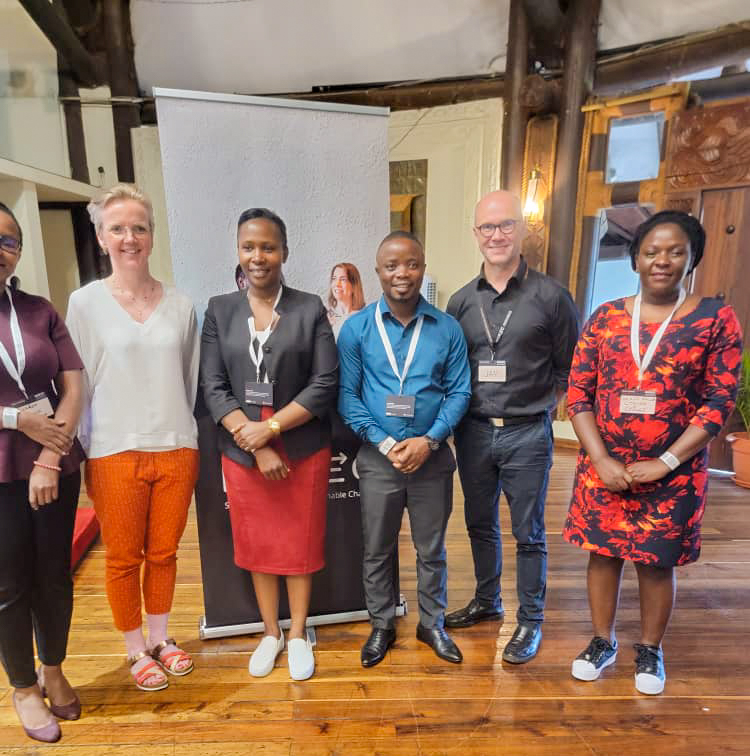
The photograph captures a moment of connection that transcends national boundaries. Mwayi Wosintha‘s Country Director and Deputy Country Director stand alongside Jan Olav Baarøy, Director General of Norway’s Agency for Exchange Cooperation (NOREC), during a four-day exchange training in Kenya.
The image represents more than a diplomatic courtesy or networking opportunity; it embodies a philosophy of development work that recognises expertise exists across borders and that the most effective capacity building happens through genuine exchange rather than one-way knowledge transfer.
This commitment to reciprocal learning has recently manifested in two complementary movements: Richard Morton and Annie Chinkhandwe returning home to Malawi after a year working with Advance Afrika in Uganda, and Simon Apedel and Dennis Tumuisiime from Advance Afrika now arriving in Malawi to work with Mwayi Wosintha’s Pioneers of Change programme.
These exchanges, facilitated through NOREC’s international work exchange programme, represent investment not just in individual professional development but in strengthening the entire ecosystem of child protection and development work across East Africa.
The NOREC Model: Exchange Over Extraction
Understanding the significance of these personnel movements requires understanding what makes NOREC’s approach distinctive in the landscape of international development cooperation. Traditional models often involve sending experts from wealthy nations to ‘build capacity’ in developing countries, an approach that frequently perpetuates colonial dynamics and fails to recognise existing expertise in the regions being ‘helped’.
NOREC operates differently. The Norwegian Agency for Exchange Cooperation facilitates reciprocal exchanges between organisations in Norway and partner countries, and increasingly, between organisations in different partner countries. The emphasis falls on ‘exchange’ rather than assistance, recognising that all participating organisations possess valuable expertise worth sharing and that all benefit from exposure to different contexts, approaches, and innovations.
The model acknowledges a fundamental truth often obscured in traditional development discourse: organisations working in challenging contexts often develop remarkable expertise precisely because they operate in those contexts. A Ugandan NGO addressing child exploitation has insights that Norwegian organisations cannot replicate from textbooks or theory. A Malawian organisation pioneering reformatory centre models has learned lessons applicable far beyond national borders. The question isn’t who has expertise to share, but how to create conditions where different forms of expertise can meet, mingle, and strengthen all parties involved.
The exchange training in Kenya where Mwayi Wosintha’s leadership team met with Director General Baarøy represents one mechanism for this knowledge sharing. These gatherings bring together professionals from diverse contexts to share challenges, strategies, innovations, and lessons learned. Participants don’t just learn from formal presentations; they build relationships, discover common ground, recognise shared struggles, and often forge partnerships that extend far beyond the training itself.
A Year in Uganda: What Richard and Annie Brought Home
Richard Morton and Annie Chinkhandwe’s return to Malawi after their year at Advance Afrika represents the completion of one exchange cycle, but understanding its value requires examining what they experienced and learned during their time in Uganda.
Advance Afrika operates in contexts that share similarities with Malawi whilst differing in crucial ways. Both countries face challenges of poverty, child vulnerability, and under-resourced child protection systems. Both grapple with balancing immediate crisis intervention against long-term systemic change. Both work within cultural contexts where traditional practices sometimes conflict with children’s rights frameworks. These parallels mean that strategies proving effective in Uganda merit serious consideration for Malawian application.
But the differences matter equally. Uganda’s history, political landscape, ethnic composition, legal frameworks, and civil society ecosystem all differ from Malawi’s. What works brilliantly in Kampala may need substantial adaptation for Lilongwe. Understanding not just what Advance Afrika does but why it works in their specific context equips Richard and Annie to thoughtfully adapt promising practices rather than blindly transplanting them.
The year-long timeframe proves crucial. Short-term visits or brief consultancies rarely provide sufficient immersion to understand an organisation’s real operations. Surface-level exposure captures the polished presentations and formal programmes but misses the informal knowledge, the institutional culture, the adaptive strategies that emerge through daily practice. Living and working with an organisation for a year reveals how theory translates to practice, how strategies evolve in response to challenges, how staff navigate complexity, and where the actual innovation happens—often quite different from what annual reports highlight.
Richard and Annie return with more than new technical knowledge or programme models. They bring expanded professional networks connecting them to Ugandan colleagues working on similar challenges. They carry fresh perspectives on Mwayi Wosintha’s own work, having seen it from outside and compared it to alternative approaches. They’ve experienced being the outsider learning a new organisational culture, which will inform how they welcome and support the Advance Afrika colleagues now arriving in Malawi. Most valuably, they’ve proven to themselves and to Mwayi Wosintha that engaging with different approaches doesn’t diminish their own expertise but enriches it.
The Return: Translating Experience into Institutional Learning
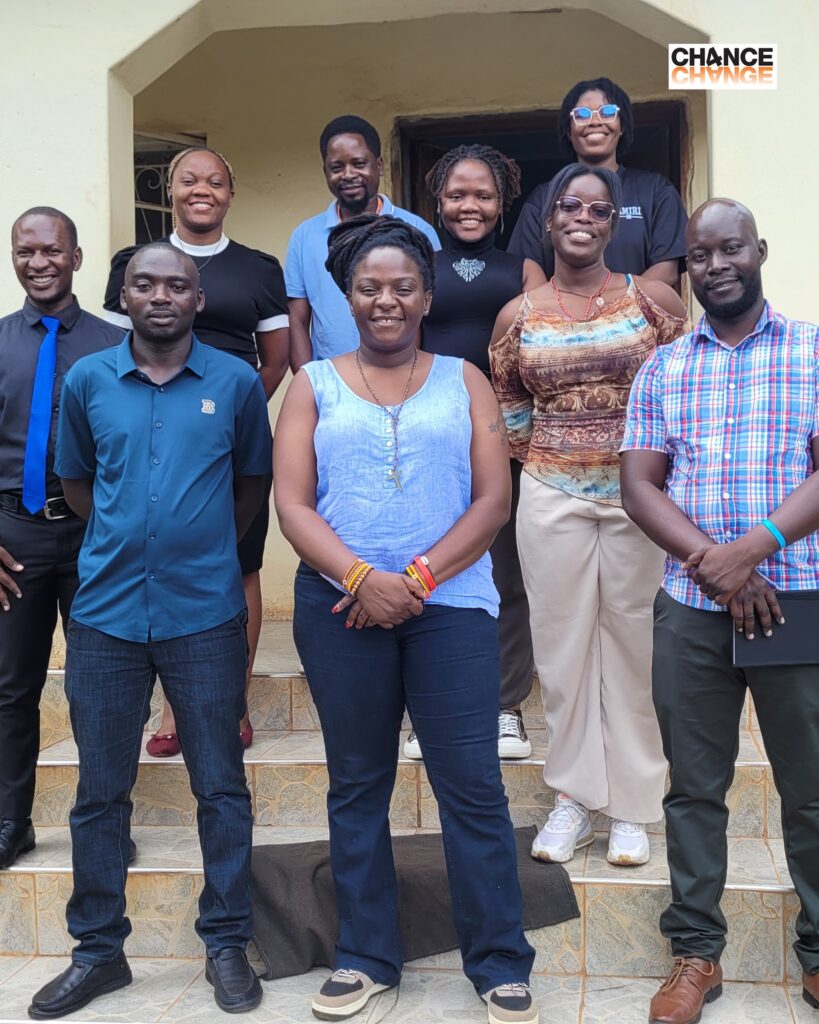
The real test of any professional exchange comes not during the placement but after, when returned participants attempt to apply their learning within their home organisations. This translation from individual experience to institutional change determines whether the exchange investment yields lasting returns or remains merely resume enhancement for individuals.
Mwayi Wosintha faces the challenge of harvesting Richard and Annie’s year of learning effectively. The temptation exists to schedule a single debriefing session where they share highlights, after which everyone returns to normal operations and the Ugandan experience gradually fades. Effective knowledge transfer requires more intentional, sustained approach.
Structured reflection processes help returned participants articulate what they’ve learned, not just in terms of specific practices but underlying principles and frameworks. What made certain Advance Afrika strategies effective? What contextual factors enabled their success? Which elements seem most applicable to Malawi? What would require adaptation? These analytical questions transform experience into transferable knowledge.
Documentation captures learning for broader organisational benefit. Written reports, case studies, and programme analyses create resources that staff who weren’t in Uganda can access. They provide reference points for future decision-making and bases for pilot projects testing promising approaches. The documentation also contributes to the wider knowledge base around child protection work in East Africa, potentially benefiting organisations beyond Mwayi Wosintha and Advance Afrika.
The most valuable knowledge transfer often happens informally through ongoing collaboration. As Richard and Annie re-engage with Mwayi Wosintha’s programmes, they naturally notice opportunities to apply Ugandan insights. A programme design challenge might spark memory of how Advance Afrika addressed similar issue. A staff training need might suggest adapting a Ugandan methodology. These organic applications, emerging from actual work rather than forced implementation, often prove most sustainable.
The timing of their return, coinciding with Simon and Dennis’s arrival from Advance Afrika, creates unique opportunity for dialogue. Richard and Annie’s recent immersion in Advance Afrika’s work positions them to facilitate meaningful exchange between the Ugandan visitors and Mwayi Wosintha’s team. They can provide context, translate institutional culture, and help both sides maximise the learning opportunity. This layered exchange—between organisations and between individuals at different stages of the exchange process—multiplies potential benefits.
Welcoming Advance Afrika: The Reciprocal Journey Begins
The arrival of Simon Apedel and Dennis Tumuisiime from Advance Afrika completes the exchange cycle, transforming it from one-way learning opportunity to genuine reciprocal collaboration. Their year with Mwayi Wosintha’s Pioneers of Change programme will mirror Richard and Annie’s Ugandan experience whilst serving different organisational purposes.
For Advance Afrika, the exchange provides their staff with exposure to Mwayi Wosintha’s innovative approaches to serving vulnerable girls. The Pioneers of Change programme has developed distinctive methodologies combining foundation support, long-term engagement, and economic empowerment in ways that address both immediate safety and underlying vulnerability. Advance Afrika’s interest in learning from these approaches suggests they see potential application in their Ugandan context, though likely requiring adaptation for different cultural and systemic realities.
Simon and Dennis bring their own expertise to share. Advance Afrika’s experience with different aspects of child protection and development work means they arrive not as passive learners but as professionals with insights that could strengthen Mwayi Wosintha’s programmes. The exchange works best when both organisations approach it with humility about what they can learn and confidence about what they can offer.
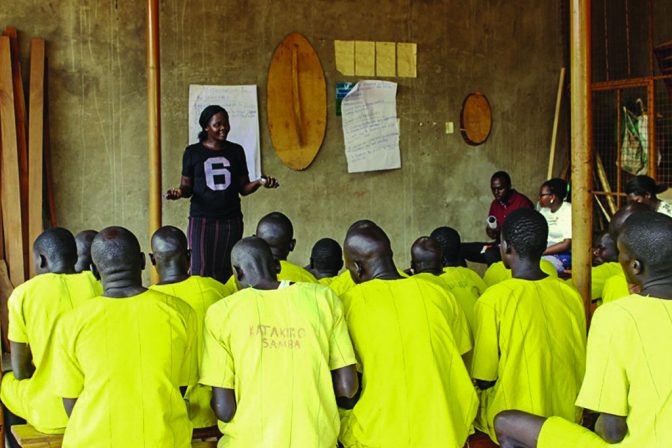
For Mwayi Wosintha, hosting international colleagues via NOREC provides oppan ortunity to see their own work through fresh eyes. Practices that seem obvious or inevitable to staff who’ve developed them over years may appear innovative or puzzling to outsiders. Questions from Simon and Dennis about why certain approaches were chosen, how specific challenges were addressed, or what alternatives were considered force articulation of tacit knowledge that local staff may not have consciously examined. This process of explaining work to outsiders often yields insights for the organisation itself.
The presence of international exchange participants also energises local teams. It signals that their work merits international attention and collaboration, validating efforts that may sometimes feel invisible or undervalued. Staff members have opportunity to share expertise, mentor international colleagues, and position themselves as knowledge holders rather than just service providers. This shift in identity—from recipients of capacity building to contributors to international knowledge exchange—strengthens professional confidence and organisational culture.
The specific focus on Pioneers of Change programme provides clear framework for the exchange. Rather than attempting to absorb everything about Mwayi Wosintha’s diverse operations, Simon and Dennis can focus deeply on understanding how the organisation serves vulnerable girls. This depth of engagement, maintained over a full year, enables genuine expertise development rather than superficial exposure. They’ll understand not just what the programme does but why, how it evolved, what challenges it faces, and where innovation continues happening.
Maximising Impact: Making NOREC Exchange Matter
The stated goal of Simon and Dennis’s placement—to gain insights into Pioneers of Change whilst sharing expertise that helps maximise Mwayi Wosintha’s impact in Malawi—articulates ambitious aspirations. Achieving them requires intentional structuring of the exchange experience and ongoing attention to how learning translates into improved practice.
Gaining meaningful insights demands more than observation. Simon and Dennis need opportunities to engage directly with programme participants, to attend workshops and training sessions, to accompany staff on field visits, to observe counselling approaches and reintegration processes. They need access to programme documentation, evaluation reports, and reflective discussions where staff analyse what’s working and what isn’t. Most importantly, they need permission to ask probing questions, challenge assumptions, and engage critically with programme design and implementation.
Sharing their expertise effectively requires Mwayi Wosintha creating spaces for their contributions. This might involve inviting them to lead staff training sessions on topics where Advance Afrika has developed particular expertise. It could include participating in programme design discussions where their outside perspective might identify blind spots or unconsidered alternatives. It might mean collaborating on pilot projects testing approaches that have worked in Uganda but haven’t been tried in Malawi.
The emphasis on maximising impact acknowledges that international exchange, whilst valuable, consumes significant resources—staff time, coordination effort, accommodation, and the opportunity cost of having team members focused on hosting rather than other priorities. Justifying this investment requires demonstrating tangible improvements to programme quality, reach, or effectiveness. This doesn’t mean expecting revolutionary change; even incremental improvements that enhance outcomes for vulnerable girls represent meaningful impact.
The diverse and innovative team that Simon and Dennis are joining will itself contribute to rich exchange experience. Mwayi Wosintha’s staff bring varied professional backgrounds, training, and perspectives. Some have extensive experience in social work, others in education, business development, or sports coaching. This diversity means the Ugandan colleagues will encounter multiple viewpoints on serving vulnerable girls, experiencing how different professional lenses complement each other in comprehensive programming.
Documentation and reflection processes throughout the placement help capture learning as it emerges rather than waiting until the end. Regular debriefing sessions where Simon and Dennis share observations, questions, and insights provide feedback to Mwayi Wosintha whilst helping the visitors process their experiences. These conversations often surface unexpected lessons or applications that might be missed without structured reflection.
Beyond Individual Organisations: Building Regional Networks
Whilst the immediate benefits of the Mwayi Wosintha-Advance Afrika NOREC exchange accrue to the two organisations directly involved, the longer-term significance may lie in contributing to stronger regional networks for child protection and development work across East Africa.
Vulnerable children don’t respect national borders, and neither should efforts to protect and support them. Trafficking routes cross countries. Displaced populations move between nations. Best practices developed in one context often have application in others. Yet organisations working on similar challenges in neighbouring countries frequently operate in isolation, unaware of innovations or lessons learned just across borders.
Exchanges like this one build personal relationships and institutional connections that begin addressing this isolation. Richard and Annie maintain contact with Ugandan colleagues long after their formal placement ends. Simon and Dennis develop networks in Malawi that persist beyond their year with Mwayi Wosintha. These relationships facilitate ongoing knowledge sharing, provide access to expertise when challenges arise, and create foundation for future collaboration.
The NOREC exchanges also contribute to developing shared understanding of child protection challenges and effective responses across the region. Whilst contexts differ, many underlying issues—poverty-driven vulnerability, inadequate government systems, cultural practices that harm children, limited resources for services—appear across multiple countries. Organisations that have learned from each other’s approaches build collective capacity to address these shared challenges.
Regional networks become particularly valuable for advocacy and policy influence. Governments and international donors often respond more readily to evidence from multiple countries than single-nation experiences. Organisations that have collaborated through exchange programmes can present coordinated evidence and recommendations, strengthening arguments for policy changes or resource allocation that benefits vulnerable children across the region.
The Kenya training where Mwayi Wosintha’s leadership met with NOREC’s Director General alongside other exchange participants exemplifies how these individual organisational partnerships contribute to broader network building. Such gatherings create opportunities for organisations beyond the specific bilateral exchanges to connect, share, and potentially develop new collaborations. The ripple effects extend far beyond the original exchange scope.
Why NOREC Invests: The Development Case for Exchange
Norway’s investment through NOREC in facilitating these exchanges reflects particular philosophy about effective development cooperation. Understanding this philosophy helps contextualise why organisations like Mwayi Wosintha and Advance Afrika have access to this opportunity and what broader purposes the exchanges serve.
NOREC operates from premise that sustainable development requires strengthening local organisations and building South-South partnerships rather than creating dependency on Northern expertise. The agency recognises that whilst Norwegian resources can facilitate exchanges, the expertise being shared flows primarily between partner country organisations who understand their contexts intimately.
Professional exchange addresses capacity building differently than traditional training or technical assistance. Rather than bringing in external consultants to deliver pre-packaged knowledge, exchange enables professionals to learn through doing, to adapt practices to their contexts, and to build genuine relationships with peers facing similar challenges. The learning proves more contextualised, more nuanced, and more likely to translate into improved practice than classroom-based capacity building.
The investment also serves Norway’s own development sector. Norwegian organisations benefit from hosting exchange participants from partner countries, gaining insights into contexts where development work happens and perspectives that challenge Northern assumptions about how change occurs. The exchanges thus strengthen Norwegian civil society alongside partner country organisations, making development cooperation more reciprocal than traditional donor-recipient relationships allow.
NOREC’s emphasis on youth development and professional growth reflects understanding that today’s exchange participants become tomorrow’s leaders in their sectors. Investing in their professional development, international exposure, and network building creates cohort of development professionals equipped to address challenges facing their countries and regions. The long-term returns on this investment may exceed immediate programme improvements, as exchange alumni shape their sectors over decades of subsequent work.
The Challenges Ahead: Making Exchange Succeed
International professional exchange, whilst offering tremendous potential benefits, also presents significant challenges that Mwayi Wosintha, Advance Afrika, and NOREC must navigate thoughtfully.
Cultural and language differences, even between East African countries sharing some historical and cultural connections, can complicate communication and collaboration. What seems like obvious professional courtesy in one context might be interpreted differently in another. Working styles, hierarchical expectations, and communication norms vary. Successfully navigating these differences requires patience, cultural humility, and explicit discussion of expectations and preferences rather than assuming shared understanding.
The logistics of hosting international staff consume organisational resources and attention. Accommodation arrangements, work permits, orientation to local systems, and ongoing support all require time and effort. Small organisations like Mwayi Wosintha and Advance Afrika must balance these hosting responsibilities against continuing to serve their primary beneficiaries effectively. The investment only makes sense if learning gains justify these opportunity costs.
Expectations management proves crucial. Both sending and receiving organisations, and the exchange participants themselves, may harbour unrealistic hopes about what the exchange will accomplish. Transformation takes time; meaningful change rarely emerges from single year of exposure, particularly in complex domains like child protection. Framing the exchange as planting seeds for long-term growth rather than expecting immediate revolution helps maintain appropriate perspective.
The challenge of translating individual learning into institutional change affects both organisations. Richard and Annie may struggle to apply Ugandan insights if organisational systems, culture, or priorities don’t create space for innovation. Similarly, Simon and Dennis’s observations about Pioneers of Change programme will benefit Advance Afrika only if leadership receptive to adapting practices based on their recommendations. Exchange success depends partly on factors beyond participants’ control.
Yet these challenges, whilst real, don’t negate the exchange’s value. They simply require acknowledgement and active management. Organisations that anticipate difficulties, plan mitigation strategies, and maintain realistic expectations whilst remaining committed to learning maximise chances that exchange delivers meaningful benefits despite inevitable complications.
Crossing Borders to Strengthen Foundations
The photograph from Kenya showing Mwayi Wosintha’s leadership alongside NOREC’s Director General captures more than a moment during a training programme. It represents commitment to a vision of development cooperation built on mutual respect, reciprocal learning, and recognition that expertise flows in multiple directions across borders.
Richard Morton and Annie Chinkhandwe’s return from Uganda brings Mwayi Wosintha a year of learning, fresh perspectives, and expanded networks that will influence the organisation’s work for years to come. The insights they gained about Advance Afrika’s approaches, the comparisons they can now draw between Ugandan and Malawian contexts, and the professional relationships they built all represent valuable assets for strengthening child protection work in Malawi.
Simon Apedel and Dennis Tumuisiime’s arrival to work with Pioneers of Change programme initiates the reciprocal journey, giving Advance Afrika similar opportunities whilst enriching Mwayi Wosintha through their expertise and outside perspectives. Their year embedded in the programme will yield insights applicable to Ugandan contexts whilst helping Mwayi Wosintha refine and strengthen their approaches through critical engagement with international colleagues.
The exchange serves purposes beyond individual organisations’ immediate interests. It contributes to building stronger regional networks for child protection work across East Africa. It demonstrates alternative model for development cooperation that respects local expertise whilst facilitating cross-border learning. It invests in professional development of individuals who will shape their sectors for decades to come.
Most importantly, it ultimately serves the vulnerable children and young people who are Mwayi Wosintha’s and Advance Afrika’s reason for existing. Every programme improvement that emerges from exchange learning, every innovation adapted from one context to another, every strengthened capacity to serve effectively translates eventually into better outcomes for children who desperately need support, protection, and opportunity.
When staff members from Malawi and Uganda share expertise, challenge each other’s assumptions, adapt promising practices, and build lasting professional relationships, they’re not just engaging in professional development. They’re contributing to collective effort to ensure that every child in East Africa, regardless of which side of national borders they happen to be born, has access to protection, justice, and chance to build future worth having.
The borders these professionals cross—physically travelling between countries, intellectually engaging with different approaches, professionally stepping outside their organisational comfort zones—ultimately strengthen the foundations of child protection work throughout the region, thanks to NOREC. That strengthening serves not abstract development goals but concrete improvements in lives of specific, individual children whose futures depend on adults who’ve learned to work together across whatever boundaries might otherwise divide them.